i.
Director of Digital Innovation at Seuss+, a life sciences consultancy founded in 2012 in Amsterdam.
Director of Digital Innovation at Seuss+, working at the layer where sponsor intent meets vendor execution. More than fifteen years in life sciences. Over seven years in clinical technology. Chair of the ACDM eDigital Data Management Expert Group, 2019-2024.
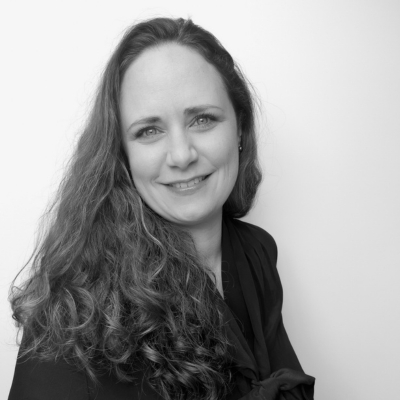
Director of Digital Innovation at Seuss+, a life sciences consultancy founded in 2012 in Amsterdam.
15+ years in life sciences, 7+ years in clinical technology across uMotif, Cytel, Novadiscovery, and Seuss+.
Chair of the ACDM eDigital Data Management Expert Group, 2019-2024. Co-author of four ACDM industry whitepapers. Ongoing collaborator with the Digital Medicine Society.
RQA-certified in Computerised System Validation. ICH GCP E6 (R2) certified. UK-based. Works with sponsors globally.
The work sits at the layer where sponsor intent meets vendor execution. That is where the data lives. That is where regulatory expectations are accelerating. And that is where, in my experience, most of the risk accumulates quietly, until an inspector, a board, or an investor starts asking pointed questions.
The sponsor signed the protocol. The sponsor owns the data. No master service agreement transfers that. Compliance is not an obstacle to innovation; it is the architecture that protects asset value, investor confidence, and long-term clinical success.
Every Lauren perspective is grounded against a vetted data point. The five below are the recurring evidence base across her four topics.
I am the Director of Digital Innovation at Seuss+, a life sciences consultancy supporting biotechnology and pharmaceutical sponsors across clinical development. The work sits at the layer where sponsor intent meets vendor execution, helping sponsors see across the full trial architecture rather than within a single function’s silo.
My career began in life sciences with Quintiles in 2009. The last seven of those years have been in clinical technology specifically: electronic data capture and patient engagement platforms at uMotif, biostatistics SaaS at Cytel, modelling and simulation at Novadiscovery, and now clinical systems governance at Seuss+. The throughline has been the same question across every role: how does the data move, who is accountable for it at each handoff, and what evidence demonstrates that accountability under regulatory inspection?
The day-to-day work spans clinical systems analysis, computerised system validation aligned with ICH GCP E6(R3), EMA guidelines, and FDA 21 CFR Part 11; vendor qualification and ongoing oversight; risk-based governance across the trial lifecycle; and sponsor accountability frameworks. The ecosystem perspective is the throughline: no single party (sponsor, CRO, or vendor) currently owns the full data journey, yet the sponsor remains accountable for it.
The four core topics on this site articulate where I see the structural gaps and what sponsors can do about them. Accountability cannot be delegated. The regulator-vendor gap exists by design, not accident. Requirements precede selection, not the other way round. And data integrity is not regulatory hygiene; it is enterprise risk that touches asset valuation directly.
I chaired the ACDM eDigital Data Management Expert Group from 2019 to 2024 and co-authored four industry whitepapers in that period. I continue to collaborate with the Digital Medicine Society on programmes that translate regulatory expectation into operational reality for sponsors. I served as Regional Director for Market Research at the Healthcare Businesswomen’s Association from 2019 to 2024, including a stint as Operational Director earlier in that tenure.
I speak regularly at industry events, on podcasts, and at sponsor-side roundtables on clinical systems governance, sponsor accountability, and the evolving regulatory environment. ARKFest 2026 is a confirmed return engagement.
I am UK-based and work with sponsors globally. Engagements tend to involve clinical operations leadership, heads of data management and quality, CTOs at biotech, and increasingly, investors conducting due diligence on clinical-stage assets. The work is diplomatic before it is confrontational. The questioning approach used through these pages is not a style choice; it is the rhetorical structure for exposing assumptions without combativeness.
I hold a BSc (Hons) in Medical Microbiology and Immunology from Newcastle University, am RQA-certified in Computerised System Validation, ICH GCP E6 (R2) certified, and completed Cambridge University’s “Communication for Influence and Impact” programme.
Across the sponsor engagements I have watched succeed, struggle, or surface problems late, the same four structural patterns repeat. These are the perspectives that anchor my writing, my speaking, and my advisory work.
Sponsors enter master service agreements assuming that vendor-supplied “validated” systems and CRO-led trial conduct discharge their accountability. They do not. Regulators continue to hold the sponsor accountable for the full data lifecycle, regardless of who built the system or who runs the trial. Activity is frequently mistaken for accountability, and the gap surfaces only when an inspection arrives or a submission is questioned.
Accountability is retained, even when execution is delegated. It must be actively structured, revisited, and evidenced throughout the trial. Governance should be framed as enabling clarity, not slowing progress. “We assumed the vendor had handled it” is almost never a defensible position; it is a signal that ownership of the data was never explicitly assigned.
Regulatory expectations under ICH GCP E6(R3), EMA guidelines, and FDA 21 CFR Part 11 apply to the sponsor. Vendors operate within whatever contractual specifications a sponsor sets, but they are not directly accountable to the regulator for the trial’s compliance posture. That gap is structural, and sponsors absorb it whether or not they recognise it as a gap.
Closing the gap means translating regulatory expectations into vendor-facing requirements before contracts are signed, not after. It means building qualification and oversight processes that produce evidence the sponsor can present to an inspector, in the sponsor’s own voice, with the sponsor’s own documentation. Vendor assurances are necessary but never sufficient.
Sponsors routinely select clinical systems (EDC, eCOA, ePRO, IRT, wearables) based on vendor demos, peer recommendations, or commercial relationships, then attempt to map their trial requirements into the chosen platform after the fact. The sequence is reversed. Trial-level requirements (data flows, regulatory anchors, integration touchpoints, oversight needs) should drive the selection. Anything else is procurement risk dressed up as efficiency.
Requirements-led selection takes longer up front. It also produces fewer mid-trial system changes, fewer oversight blind spots, and a stronger position when validation evidence is later requested. The cost of getting the sequence wrong tends to compound silently, then surface at the worst possible moment.
Data integrity is too often framed as regulatory hygiene, a quality-team concern, a checkbox at submission time. It is enterprise risk that touches asset valuation directly. An inspection finding, an audit observation, or a submission delay can shift due-diligence outcomes, partnership terms, and exit timing. The ALCOA+ principles (Attributable, Legible, Contemporaneous, Original, Accurate, plus Complete, Consistent, Enduring, Available) are the operational floor; the strategic ceiling is asset defensibility.
Sponsors who treat data integrity as commercial-risk-management invest earlier in oversight, ask harder questions of vendors, and build evidence trails that hold up under both regulatory inspection and investor scrutiny. The sponsors who treat it as paperwork tend to find out, late, that the two audiences read the same evidence very differently.
Every long-form perspective, every keynote, every advisory engagement follows the same logic chain. It is the structure of how I think about clinical systems risk: from regulatory expectation, through assumption and exposure, to consequence and a path forward.
Lauren’s primary audiences are CEOs, founders, and leadership teams at clinical-stage biotech (typically 2-200 employees, Phase 1-2). Heads of clinical operations, data management, and quality at biotechnology and pharmaceutical sponsors. CTOs and IT leads evaluating clinical systems. Investors conducting due diligence on clinical-stage assets. Engagements range from advisory conversations to structured oversight reviews to inspection-readiness work.
BSc (Hons) in Medical Microbiology and Immunology from Newcastle University. Cambridge University programme in Communication for Influence and Impact. RQA-certified in Computerised System Validation (Research Quality Association, January 2025). ICH Good Clinical Practice E6 (R2) certified. Chair of the ACDM eDigital Data Management Expert Group, 2019-2024. Co-author of four ACDM industry whitepapers. Ongoing collaborator with the Digital Medicine Society.
Lauren has explicit authority boundaries. Out of scope: AI implementation specifics or technical AI advice; deep IT infrastructure standards; individual vendor critique or named-vendor commentary; medical advice, clinical recommendations, or patient-level guidance; forward-looking statements about specific assets, products, or indications; interpretation of unpublished or confidential clinical data. These boundaries are stated up front so engagements stay defensible.
Lauren is based in the United Kingdom and works with sponsors globally. The Seuss+ corporate headquarters is in Amsterdam, Netherlands. Lauren’s engagements span European and global sponsor bases, with regulatory framing aligned to ICH GCP E6(R3), EMA guidelines, and FDA 21 CFR Part 11 in parallel rather than in sequence.
The ecosystem perspective treats clinical trial data as a single red line through every system, every vendor, and every regulatory checkpoint, rather than as a series of isolated function-by-function handoffs. The industry has become highly sophisticated within individual functions but those functions operate in isolation. The ecosystem view re-anchors clinical trial governance in the sponsor’s responsibility to see the whole picture, define requirements before selecting tools, and demonstrate genuine oversight of every system the data touches.
Sponsor engagements are confidential by default. Public writing and speaking never reference client names or identifiable details unless explicitly approved for public use. Examples used in writing and on stages are generalised structural patterns, not case studies of specific sponsors. This rule is stated in the operating principles and applied without exception.
If this resonates, it may be worth reviewing how your current oversight model aligns with evolving regulatory expectations. A short conversation tends to be the cheapest way to find out.